AWETRAIN gathers in Munich for second training week
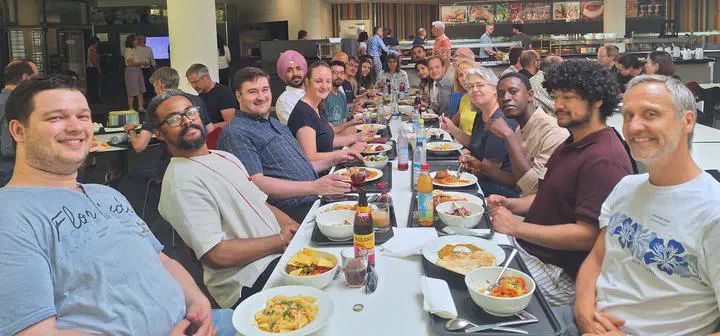
The AWETRAIN consortium recently came together at Hochschule München (Munich University of Applied Sciences) for five days of technical training, collaboration and professional development.
Building on the foundations established during the first training event in Delft, the Munich programme focused on the electrical integration of airborne wind energy systems, exploring how AWE technologies can contribute to future renewable energy systems while addressing the technical, regulatory and societal challenges associated with their deployment.
Throughout the week, participants took part in lectures, interactive workshops, guest presentations and collaborative activities designed to strengthen both technical expertise and interdisciplinary cooperation across the network.
Understanding the energy system around airborne wind energy
The technical programme introduced participants to key concepts including power grids, renewable energy systems, energy transition challenges and atmospheric flow, providing the broader context in which future airborne wind energy systems will operate.
Sessions also explored stakeholder engagement, business development pathways and the influence of regulation and public policy on the commercialisation of emerging energy technologies. These discussions encouraged Doctoral Candidates to look beyond their individual research projects and consider the wider ecosystem required for successful AWE deployment.
Learning from industry and external experts
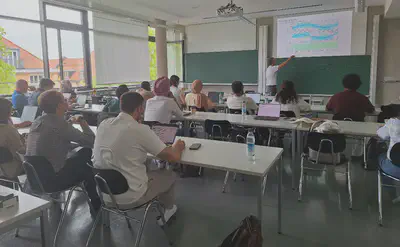
The training week featured several guest lectures from experts representing both industry and the wider energy sector.
Among them, Kristian Petrick, Secretary General of Airborne Wind Europe, presented current and future applications of airborne wind energy, highlighting promising deployment opportunities and real-world use cases.
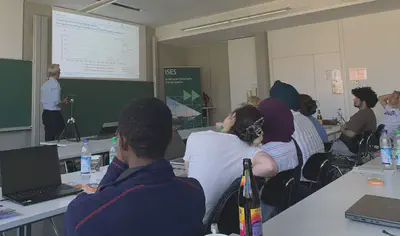
Additional presentations covered:
the perspective of electricity distribution system operators and the challenges of integrating renewable energy into modern power grids
practical lessons learned from the development and operation of airborne wind energy systems by
Together, these sessions connected academic research with real-world experience, offering valuable insights into the pathway towards commercial deployment.
Strengthening collaboration across the network
A central objective of the week was to reinforce collaboration between the twelve Doctoral Candidates.
Each Doctoral Candidate presented the progress of their research before participating in collaborative sessions to identify links and interfaces between the different projects. By mapping data needs, shared models and research outputs, the group established clearer connections between projects and laid the foundations for their first joint scientific publication.
The discussions highlighted the importance of communication and knowledge exchange in achieving AWETRAIN’s long-term vision of developing a holistic understanding of airborne wind energy systems.
Beyond technical training
Alongside the scientific programme, participants also took part in sessions on scientific writing, personal development, team dynamics and self-awareness, helping them strengthen essential transferable skills for their future research careers.
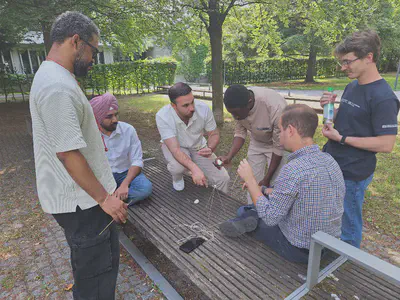
A laboratory tour at Hochschule München and social activities throughout the week further reinforced the collaborative spirit of the network and provided valuable opportunities for informal exchanges between researchers, supervisors and industry representatives.
Looking ahead
The second AWETRAIN training week once again demonstrated the strength of the network’s collaborative approach. By bringing together expertise from academia, industry and the wider AWE community, participants gained new technical knowledge, strengthened professional connections and advanced the collaborative research that will help accelerate the industrialisation of airborne wind energy.
As the project progresses, these network-wide training weeks will continue to equip the next generation of researchers with the knowledge, skills and collaborative mindset needed to shape the future of the AWE sector.

Jesús Carballo
Communications Manager
Driving communications and outreach in AWETRAIN, and supporting policy, regulatory development, and international collaboration efforts in Airborne Wind Energy.