Sweder Reuchlin, Kitepower "We are getting a lot of extra fire-power to address the industry's toughest challenges"
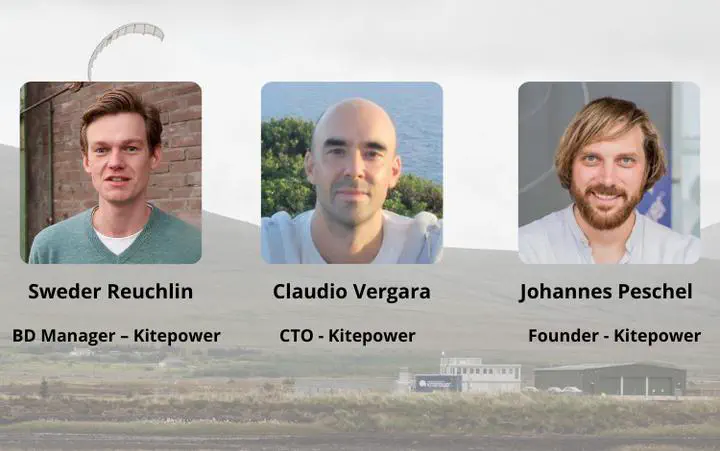
This week in our AWETRAIN supervisor interview series, we wrap up with Kitepower, interviewing Sweder Reuchlin, Claudio Vergara, and Johannes Peschel on the role of industry in advancing airborne wind energy.
Kitepower has been developing innovative AWE systems for over a decade, providing practical expertise and industry-driven data to support the AWETRAIN project.
Sweder Reuchlin, Kitepower’s Business Development Manager, emphasizes the value of AWETRAIN for the industry: “We are getting a lot of extra fire-power to address the industry’s toughest challenges.” Within the project, he supervises the DC7 doctoral candidate and highlights the importance of connecting market needs with product development, creating a market pull that ensures research is aligned with real-world challenges.
Kitepower brings extensive technical and commercial knowledge to AWETRAIN, covering system design, flight control, grid integration, regulatory compliance, and market adoption strategies. Claudio Vergara, the company’s CTO, explains, “airborne wind energy is a very promising technology, but like many emerging energy solutions it must mature simultaneously on several fronts: technical performance, regulatory frameworks, and public acceptance.” By coordinating research across these disciplines, AWETRAIN accelerates the path from prototypes to deployable energy infrastructure.
Johannes Peschel, founder of Kitepower, highlights the technical achievements of the company: “Our system autonomously launches, lands, and harvests wind energy. The remaining improvements focus on extending lifespan and enhancing efficiency, which continue to pose exciting challenges.” Kitepower also provides access to operational data, test facilities, and collaborative opportunities for AWETRAIN doctoral candidates, allowing them to directly contribute to the development of real systems.
The AWETRAIN collaboration between universities, research centres, and Kitepower ensures that doctoral candidates gain exposure to both technical and commercial aspects of AWE. Vergara adds, “the candidate will work with real system models and operational data, developing strategies at both the device and plant levels to improve grid-serving behaviour.” This transdisciplinary environment bridges theory with practice, providing candidates with the tools to address technical, regulatory, and societal challenges in a coordinated way.
For the supervisors, guiding the next generation is especially rewarding. Sweder concludes, “these renewable energy researchers will have a great opportunity to be on the forefront of an exciting time ahead. I very much look forward to contributing wherever I can to accelerate the market adoption of the technology.”
Through AWETRAIN, Kitepower ensures that tomorrow’s airborne wind energy researchers are industry-ready, technically skilled, and equipped to help scale this innovative renewable technology to meet society’s energy needs.

Jesús Carballo
Communications Manager
Driving communications and outreach in AWETRAIN, and supporting policy, regulatory development, and international collaboration efforts in Airborne Wind Energy.